The global car industry is entering a new era, and traditional automakers are facing a challenge that goes far beyond building powerful engines or designing attractive vehicles. Chinese carmakers are expanding internationally with competitively priced electric vehicles, advanced technology and increasingly ambitious export plans.
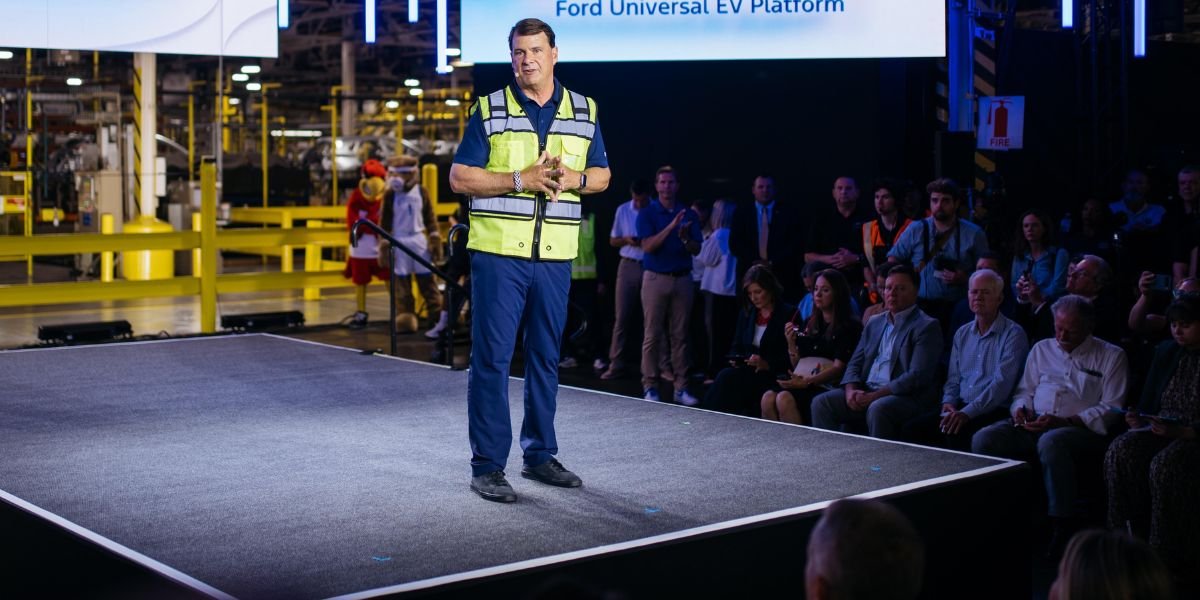
Ford CEO Jim Farley has warned that the United States needs to be careful about how Chinese automakers enter its market. Speaking at an Automotive News conference in Detroit on September 29, 2026, Farley pointed to Europe as a warning, saying it was already too late for the region to respond effectively to the competitive pressure.
Why Chinese Automakers Are Becoming a Major Challenge

Affordable Cars and Rapid EV Development
Companies such as BYD and Geely have expanded their presence across international markets. Their growing electric-vehicle portfolios, battery expertise and competitive manufacturing costs are putting pressure on established brands from the United States, Europe, Japan and South Korea.
Chinese automakers are also targeting markets across Southeast Asia, the Middle East and Latin America. Reuters reported that China’s vehicle exports could reach approximately 12 million cars in 2026, compared with around 3 million in 2022.
For established manufacturers, the challenge is not simply matching vehicle performance. They must also compete on purchase price, software, battery costs, charging capability and the speed at which new models reach customers.
Can U.S. Import Restrictions Protect Detroit?

Tariffs and Technology Restrictions
The United States has imposed significant trade barriers on Chinese-made electric vehicles and restrictions affecting certain connected-vehicle technologies. These measures limit direct access to the American market, but they do not automatically remove the competitive pressure Chinese manufacturers create elsewhere.
When Chinese brands become stronger in Europe and other export markets, Ford and its competitors face greater pressure to develop affordable vehicles that appeal to customers worldwide. Restrictions may provide some protection at home, but they cannot by themselves guarantee that domestic manufacturers will remain competitive internationally.
Ford’s Strategy: Competition and Cooperation

Working With Chinese Technology Partners
Ford’s approach includes both direct competition and selective partnerships. The company works with Chinese battery manufacturer CATL on battery technology for its Michigan facility, aiming to improve access to cost-effective battery production.
Ford has also announced a partnership with Geely involving vehicle development and manufacturing in Valencia, Spain. The arrangement reflects a wider industry reality: automakers may compete for customers while cooperating in areas where sharing technology, costs or manufacturing capacity makes business sense.
However, these partnerships have attracted political scrutiny. In September 2026, U.S. Transportation Secretary Sean Duffy raised concerns about Ford’s relationships with Chinese companies, citing national security and domestic manufacturing considerations.
What Does This Mean for American Car Buyers?
The outcome could affect vehicle prices, model availability and the pace of technological development. Greater competition may encourage manufacturers to improve battery performance, introduce new features and reduce production costs. At the same time, trade restrictions and security requirements can influence which vehicles and technologies are available in the United States.
For Ford, General Motors and Stellantis, the longer-term challenge is to develop products that customers want at prices they can afford, while maintaining domestic manufacturing, supply-chain resilience and regulatory compliance.
Final Verdict
Jim Farley’s warning highlights a central question for the future of the automotive industry: how can established manufacturers protect their home markets while remaining competitive worldwide? Import restrictions can influence market access, but innovation, manufacturing efficiency, battery technology and affordable vehicles will also shape the industry’s direction.
The competition between Detroit and China’s rapidly expanding automakers is therefore about more than imports. It is about who can deliver the vehicles that customers want in an increasingly technology-driven market.
Disclaimer
This article is for informational purposes and is based on published reporting available as of October 2026. Statements attributed to executives and government officials reflect their reported positions and do not necessarily represent independently established conclusions. Trade policies, partnerships and automotive market conditions may change.