
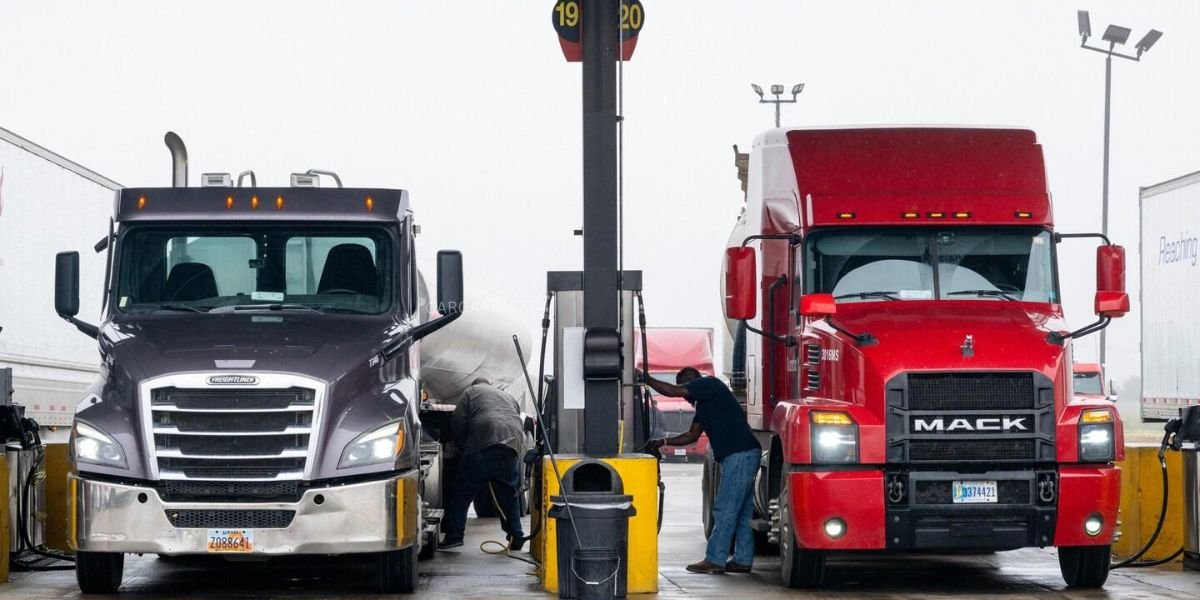
When a truck delivers groceries to a supermarket or carries parts to a factory, fuel is one of the biggest costs behind the journey. For American truck drivers, diesel prices can make the difference between a profitable trip and a difficult week. In 2026, elevated fuel costs are putting pressure on trucking companies, independent owner-operators and the wider supply chain.
According to the U.S. Energy Information Administration (EIA), the national average retail price of on-highway diesel reached $6.199 per gallon on October 5, 2026, down from $6.529 the previous week. That is still $2.488 higher than the same week a year earlier.
U.S. Energy Information Administration (EIA)
2026 Diesel Prices in the USA: Latest Table
| Price indicator | Diesel price |
|---|---|
| U.S. average, October 5, 2026 | $6.199/gallon |
| Previous week, September 28, 2026 | $6.382/gallon |
| Same week in 2025 | $3.711/gallon |
| Weekly change | Down $0.183/gallon |
| Year-on-year change | Up $2.488/gallon |
Source: EIA weekly retail diesel data. Prices include taxes and reflect the national average, not the price at every truck stop.
U.S. Energy Information Administration (EIA)
+1
How Higher Diesel Prices Affect Trucking Companies

Rising Operating Costs and Smaller Profit Margins
Diesel is a major operating expense for long-haul trucking. When prices climb, carriers must spend more to move the same load over the same distance. The pressure is especially serious for independent drivers and small fleets, which may have less bargaining power when buying fuel or negotiating shipping rates.
For example, a truck that uses 200 gallons on a long trip would spend about $1,240 at $6.20 per gallon. At $3.71 per gallon, the same fuel would cost approximately $742. That is nearly $498 more for one trip, before considering other operating expenses.
Fuel Surcharges and Freight Rates
Many trucking companies use fuel surcharges to recover some of the extra cost from customers. These charges may be calculated using weekly diesel-price indexes, mileage and contract terms. For example, AAA Cooper Transportation bases its published fuel surcharge schedule on the national average diesel index.
However, not every carrier can pass the entire increase on to customers immediately. Independent operators working under fixed-rate contracts may have to absorb part of the difference, putting pressure on their cash flow.
Why Diesel Prices Are So High in 2026

The EIA explains that diesel prices are affected by crude oil costs, refinery margins, distribution expenses and taxes. Tight supplies of distillate fuels and higher crude oil prices have contributed to recent increases.
U.S. Energy Information Administration (EIA)
Global disruptions can add further uncertainty. Because diesel is essential for freight, agriculture, construction and industrial activity, changes in energy markets can quickly influence transportation costs across the economy.
What Can Truckers Do to Manage Fuel Costs?
Better Planning and Fuel Efficiency
Truck operators can reduce some of the pressure by planning efficient routes, limiting unnecessary idling, maintaining tyre pressure and keeping engines properly serviced. Comparing fuel prices along a route and using available fleet discounts can also help.
Smaller operators should calculate their true cost per mile and check how fuel surcharges are applied to each contract. These steps cannot eliminate high fuel prices, but they can help prevent a difficult period from becoming a financial crisis.
Final Verdict
High diesel prices remain a major challenge for the U.S. trucking industry in 2026. Although the national average eased to $6.199 per gallon on October 5, it remained far above the level a year earlier. Trucking companies, drivers and customers will continue to feel the effects through tighter margins and possible freight-rate increases.
Disclaimer
This article is for informational purposes only. Fuel prices change frequently and vary by state, supplier and truck stop. Cost examples are illustrative, not guaranteed operating costs. Verify the latest EIA data and individual carrier fuel-surcharge terms before making business decisions.